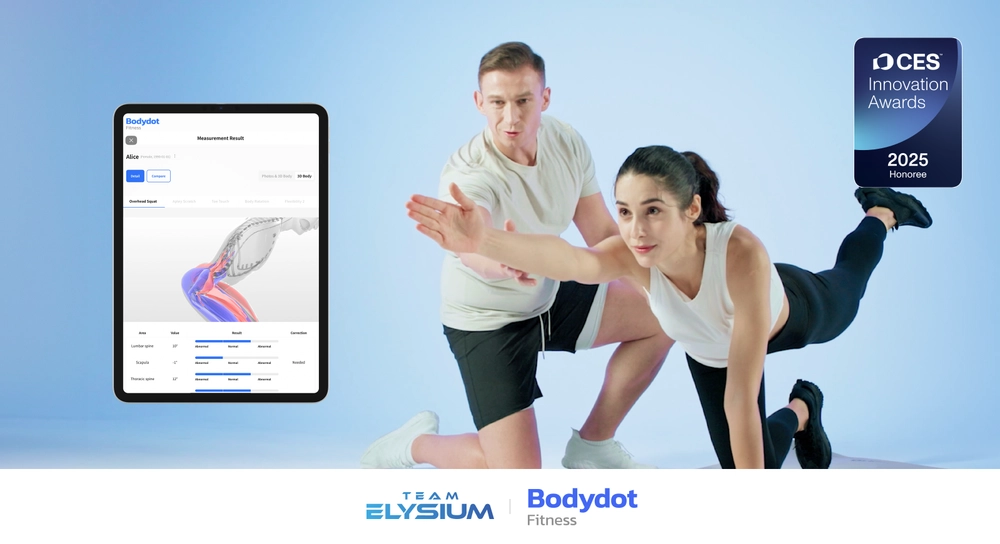
If You Can Assess the Body by Eye, Why Use a Body Analyzer?
This is a question we hear often from experienced studio owners and instructors.
So let us turn the question around.
Why rely on visual assessment alone?
The answer is probably one of three things:
- It’s accurate enough.
- It’s faster.
- It doesn’t cost anything.
None of these answers are necessarily wrong.
But when you take a closer look, all three may be different from what they seem.
The Eye Is Accurate Enough
That’s true. An experienced studio owner or instructor can often assess the body with a high degree of accuracy.
The problem isn’t the trained eye. It’s the photo — and the way the member sees that photo.
The Photo
At many centers without a body analyzer, members are asked to stand in front of a grid backdrop and have their posture photographed.
It’s familiar and simple. But this is also where accuracy can start to become less reliable.
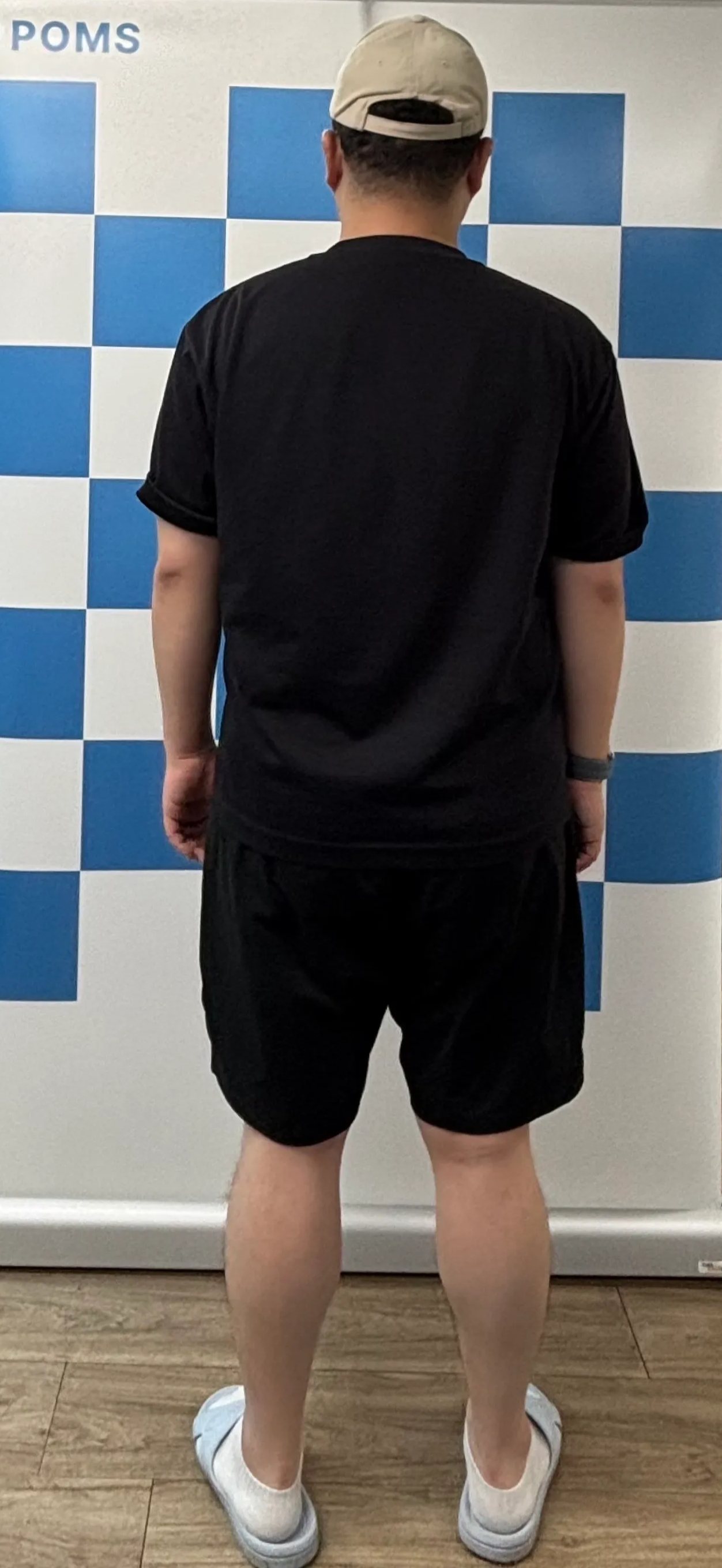
Example 1. Subtle imbalances can be difficult to see in a photograph.
Example 2. Even a slight change in camera angle can make the body look different.
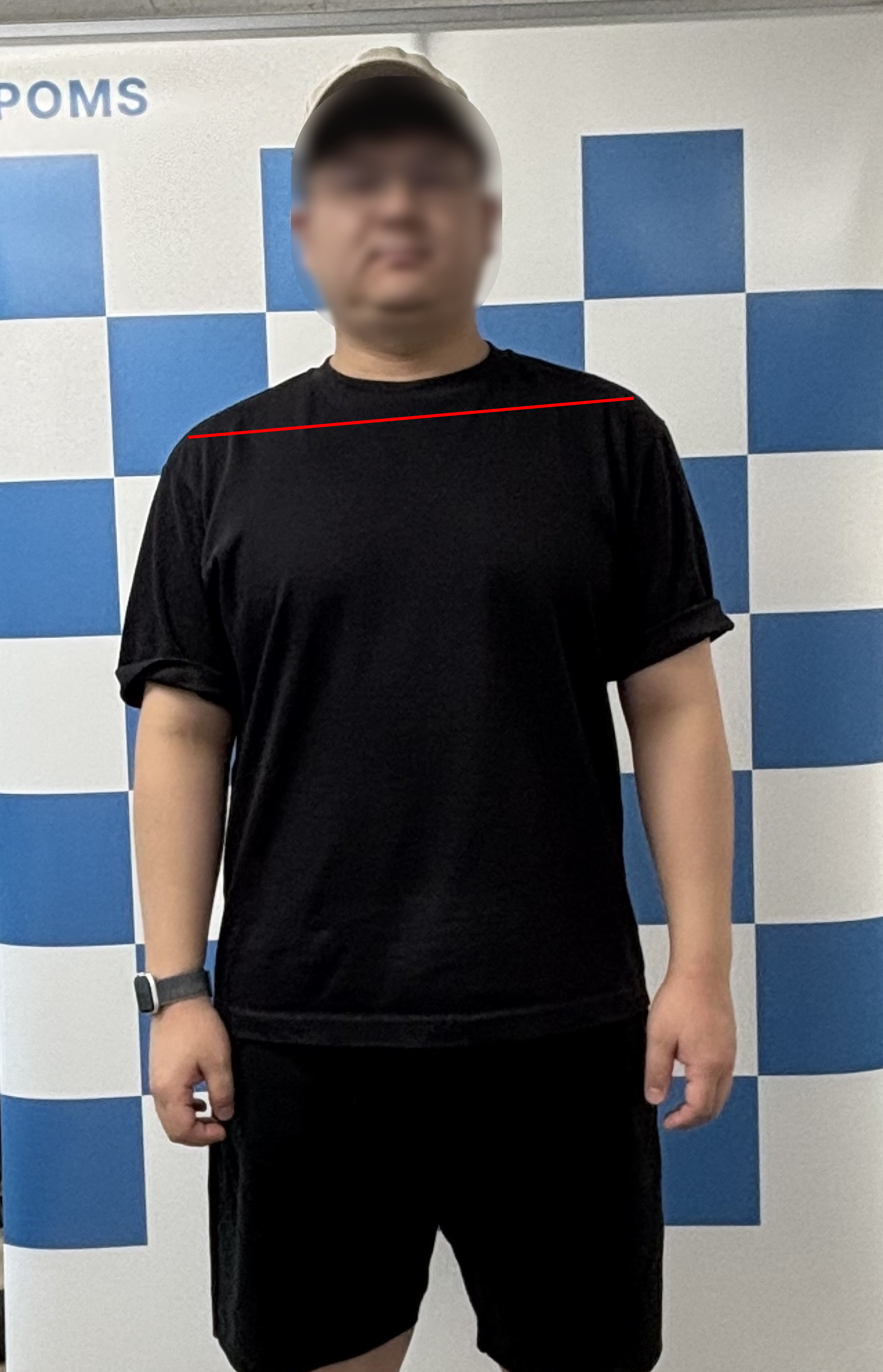
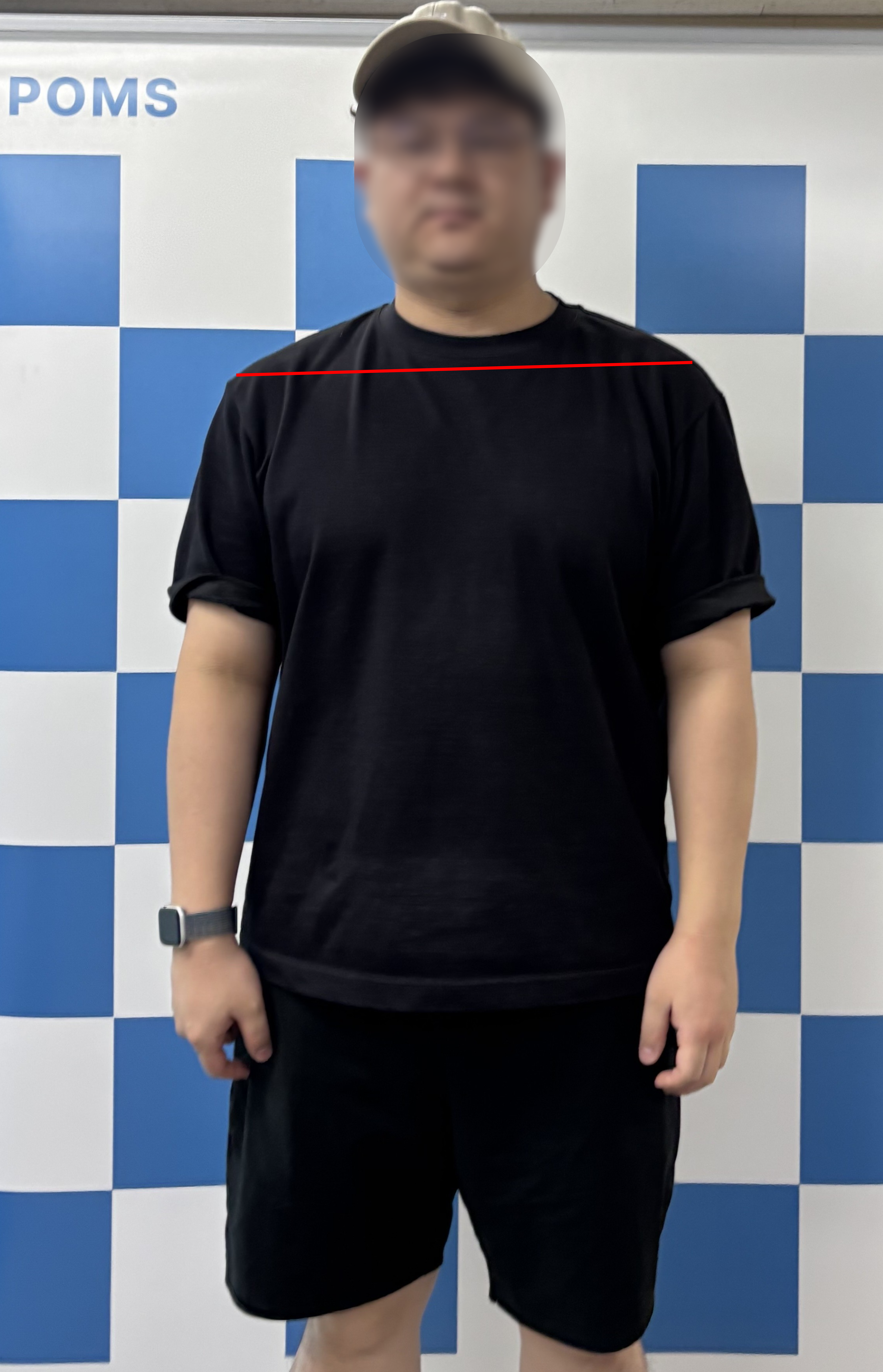
Even when you photograph the same person, if the results change depending on the angle, distance, or lighting, it can no longer be considered objective data. The process itself makes it difficult to produce consistent results every time.
The Member’s Perspective
But the bigger problem comes next.
When you show this photo to the member, subtle imbalances may not be immediately obvious to them. That’s why trainers often draw lines over the photo to make the differences more visible.
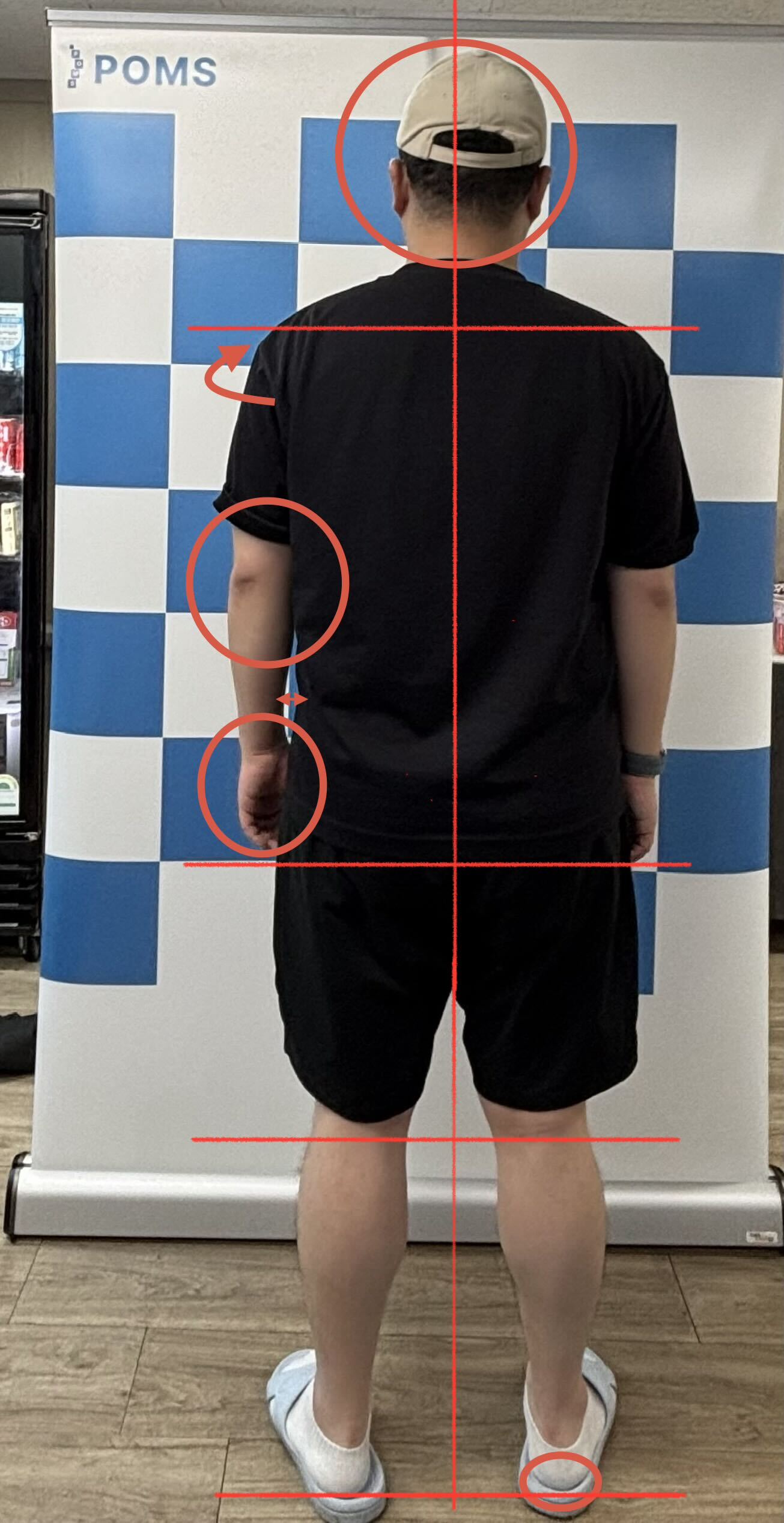
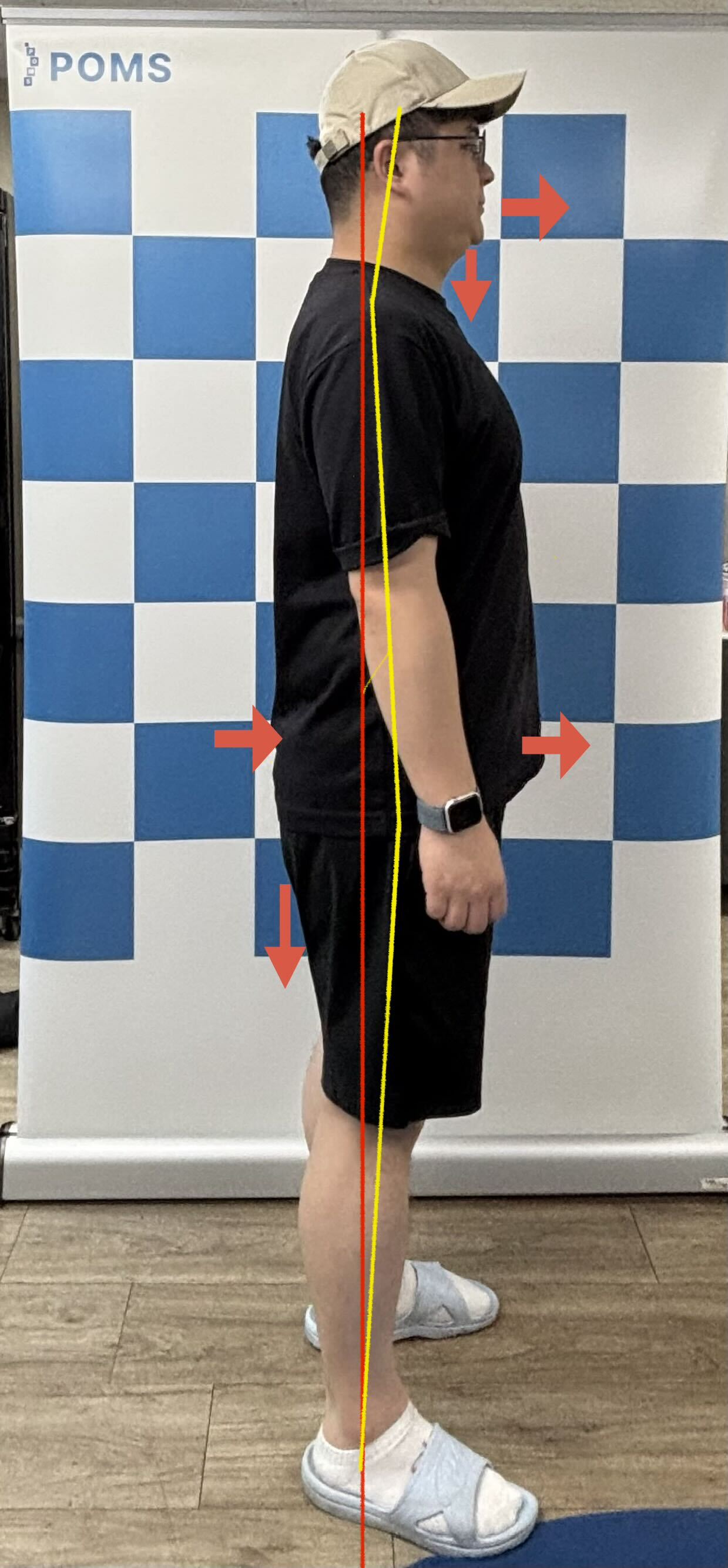
“Isn’t this good enough?”
From a member’s perspective, this is a completely natural reaction.
With nothing more than a hand-drawn line on a photo, it’s difficult to tell whether there is actually a problem — or whether the trainer is simply trying to persuade them to sign up.
Why Does This Matter?
This is where the trainer’s professional judgment can lose credibility, while the member starts to wonder:
“Are they just saying this because they want me to sign up?”
This isn’t just an issue of accuracy. It’s an issue of credibility.
And when credibility breaks down, the outcome is clear. Conversion rates drop, and so do retention and re-registration rates.
The moment a member says, “It looks normal to me,” the consultation has already lost half of its effectiveness.
It’s Fast
But is it really?
We tested it ourselves.
The measurement alone takes at least 5–10 minutes. Add the follow-up work of drawing lines and explaining the results, and the process takes even longer.
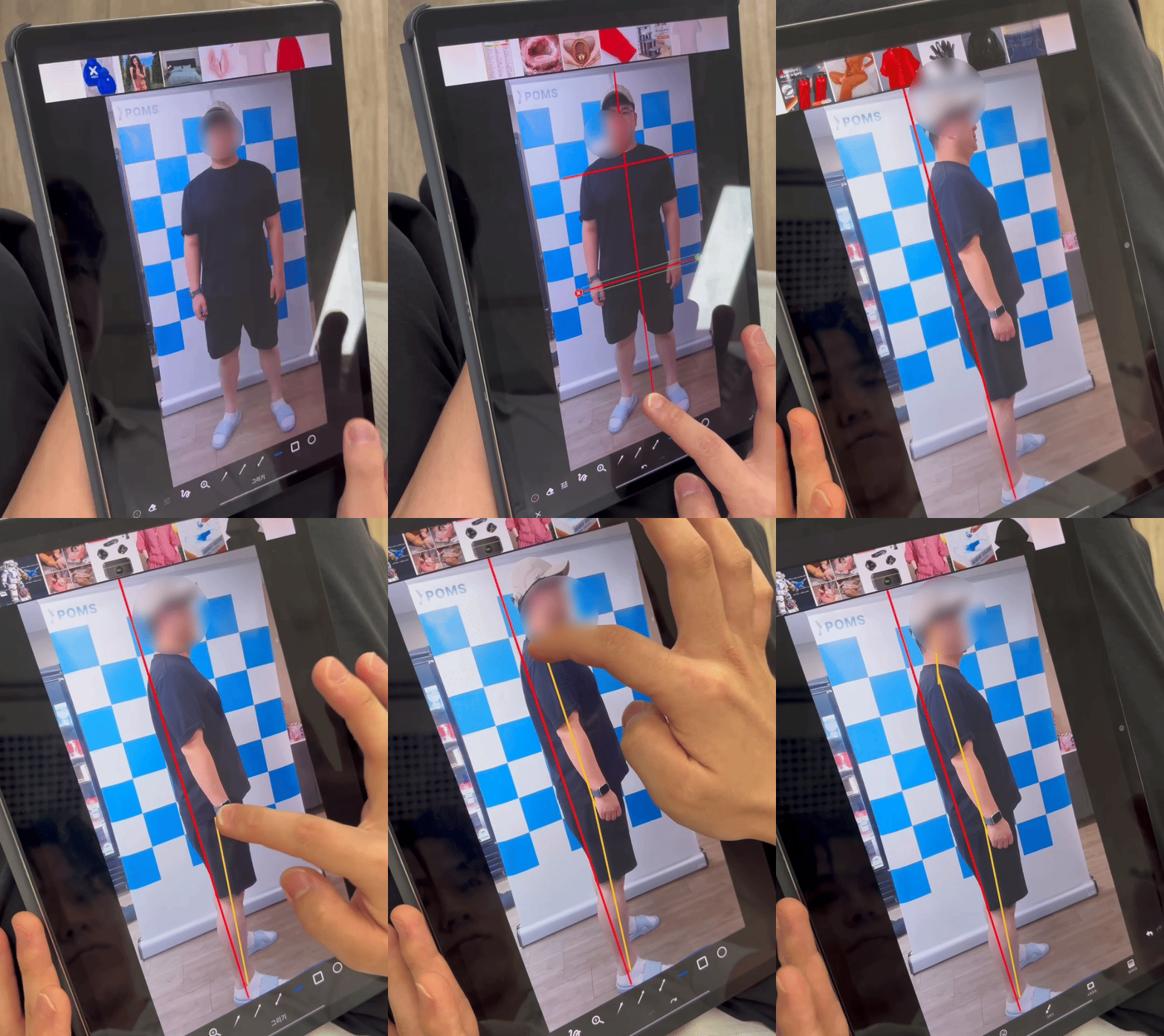
By contrast, Bodydot’s body analyzer can complete four basic measurements and generate a report in around 30 seconds.
Why Are 5–10 Minutes a Problem?
It may seem like an insignificant amount of time. But if you have 10 consultations a day, that’s an hour. Over the course of a month, it adds up to more than 20 hours.
During that time, each staff member can handle fewer clients. During peak hours, waiting lines can form, and when the wait gets too long, some potential members may simply give up and walk away.
Looking at it more realistically, if you spend all that time on a consultation and it still doesn’t lead to a sign-up, it’s more than just a loss of time.
For the consultant, it can build into the feeling of “This probably isn’t going to work again.” And that psychological burden can affect the quality of the next consultation.
The method that seemed faster may actually be eating away at two things at once: your capacity and your team’s mental bandwidth.
It Costs Nothing
That’s true. If you don’t use any equipment, the initial cost is zero.
But the real question is this:
How much are you making with that zero investment?
We spoke with a center that actually adopted Bodydot to find out.
A consultation backed by numbers and one explained with hand-drawn lines are bound to produce different results.
There’s one more thing worth considering.
What if you could consult with more people within the same amount of time?
When one staff member can handle more consultations in a day, it means creating more revenue opportunities with the same labor cost.
So, what is actually more cost-effective?
Is it spending nothing and missing potential opportunities, or investing in a tool that can improve both your conversion rate and the number of clients you can handle?
So, what is truly the cheaper option?
Accurate, Fast, Affordable — It’s Time to Think Again
The more experienced you are as a studio owner or instructor, the more confident you may be in the methods you’ve used over the years.
And that confidence isn’t necessarily misplaced.
But turning that expertise into something members can see for themselves and understand through data — that’s what a body analyzer can do.
No more guessing. Know your body.